
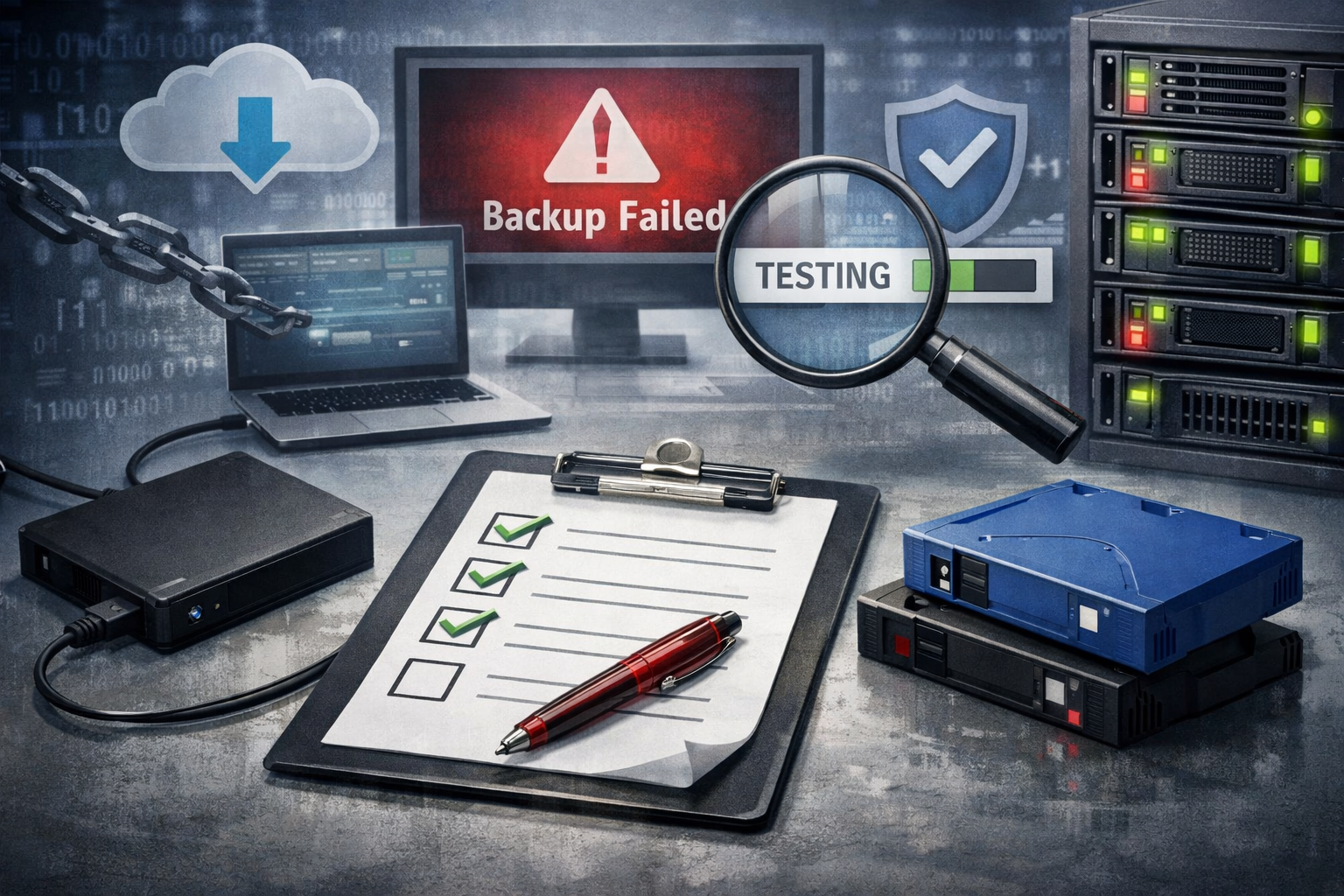
The Importance of Regular Backup Testing
In today’s digitally driven business landscape, the integrity of your data can be a critical determinant of your enterprise’s resilience and operational continuity. Regular backup testing is not merely a precaution; it is a necessity that underpins a robust data management strategy. Businesses often invest in extensive backup systems, yet these systems are only as reliable as their last successful test. Without consistent testing, companies risk discovering too late that their backups are incomplete, corrupted, or otherwise unusable.
Backup testing ensures that your data recovery processes are effective and timely, minimizing downtime in the event of hardware failure, cyber incidents, or natural disasters. It verifies that critical data, including emails, cloud applications, and business systems, can be restored efficiently, maintaining business operations without significant disruption. Furthermore, regular testing helps identify any discrepancies or gaps in the backup process, allowing for timely adjustments and the reinforcement of cybersecurity measures.
For small to mid-sized businesses, particularly those without a dedicated IT department, regular backup testing is a vital safeguard against data loss. It helps align recovery strategies with current business needs and technological environments, providing peace of mind that your data is secure and accessible when needed. Thus, incorporating a routine schedule for backup testing not only enhances system reliability but also fortifies your business against potential losses, ensuring a smoother recovery in the face of unforeseen events.
Understanding Ransomware and Its Impact on Backups
In today’s digital landscape, ransomware stands as a formidable threat to businesses of all sizes, capable of crippling operations and causing immense financial loss. Ransomware is a type of malicious software designed to block access to a computer system or encrypt files until a sum of money is paid. However, its impact extends beyond immediate operational disruption, infiltrating the very safety nets businesses rely upon – their backups.
Backups are essential for data recovery after any cyber incident, and they play a pivotal role in minimizing downtime and data loss. Unfortunately, ransomware attacks often target these backups as well. If a business overlooks regular backup testing, it risks discovering, too late, that its backup copies are either corrupted or inaccessible. Ransomware can encrypt backup files stored on local networks or cloud services, rendering them useless unless specific protective measures are in place.
To counteract this threat, businesses must engage in comprehensive backup strategies that include regular testing and validation. Testing ensures that backups are not only successfully created but also recoverable in the event of an attack. By simulating recovery scenarios, organizations can identify vulnerabilities in their backup systems, strengthening their defenses against ransomware. Moreover, a well-tested backup system can significantly reduce the negotiation leverage of cybercriminals, as businesses would not be solely reliant on paying ransoms to regain access to their data.
In essence, understanding ransomware and its potential impact on backups emphasizes the need for proactive measures. Regular backup testing and validation form a crucial part of a robust cybersecurity strategy, offering peace of mind and a reliable path to recovery should the worst occur.
The Consequences of Permanent Data Loss
In today’s digital age, data serves as the lifeblood of businesses, driving decision-making, customer interactions, and operational efficiencies. However, when backup systems fail due to neglect in testing, companies face the dire consequence of permanent data loss, an outcome that can cripple any organization. The permanence of such a loss is not just about losing files; it is about the irrevocable disappearance of critical business information, which can lead to significant financial repercussions and reputational damage.
Imagine a scenario where customer data, financial records, and strategic documents vanish overnight. Without the assurance of a robust backup strategy, this nightmare becomes a reality. The cost of recovering or recreating such lost data is often exorbitant, and in some cases, impossible. This financial burden compounds with the potential loss of customer trust, as clients demand reliability and security of their personal and financial information. Businesses known for poor data handling may find themselves struggling to retain their clientele.
Moreover, the regulatory implications of data loss can be severe. Many industries are bound by strict compliance requirements, which mandate the protection and availability of data. Failure to comply can result in hefty fines and legal battles, further draining resources. Thus, ignoring backup testing not only risks financial stability and customer trust but also exposes companies to legal and regulatory threats.
Ultimately, the consequences of permanent data loss can ripple through every aspect of a business, underscoring the critical importance of regular and thorough backup testing. By ensuring that backup systems are reliable and functional, businesses safeguard their most valuable asset—information—against unforeseen disasters.
Identifying and Mitigating Silent Data Corruption
Silent data corruption is a pernicious issue that can stealthily undermine the integrity of your business’s data infrastructure. It occurs when data is altered in subtle, undetected ways, often without triggering immediate error messages or alerts. Such corruption can be the result of hardware malfunctions, software bugs, or even external factors like cosmic rays, which are rare but possible. The insidious nature of silent data corruption is that it can propagate through systems, contaminating backups and making reliable data recovery difficult.
Identifying silent data corruption requires vigilant monitoring and regular testing of backup systems. Advanced techniques, such as checksum verification and data integrity audits, can help detect anomalies that may indicate corruption. Implementing a robust testing regimen for your backup systems is essential to ensure that any corrupted data is identified before it becomes a systemic problem.
Mitigating the impact of silent data corruption involves creating multiple layers of data protection. This includes employing redundancy strategies like RAID configurations and ensuring that backups are stored in diverse locations, reducing the risk of simultaneous data loss. Regularly scheduled backup tests are crucial to verify the integrity of stored data and confirm that recovery processes function as expected.
Ultimately, by prioritizing the identification and mitigation of silent data corruption within your backup strategy, you safeguard your business against potential data loss that could lead to operational disruptions, financial setbacks, and reputational damage. A proactive approach to backup testing not only fortifies data integrity but also enhances the overall resilience of your business systems.
Minimizing Expensive Downtime with Tested Recovery Processes
In today’s fast-paced business environment, where every minute lost translates into potential revenue drain, minimizing downtime is crucial. One of the most effective strategies to ensure business continuity is through the implementation of tested recovery processes. The essence of these processes lies in their ability to swiftly restore operations after a disruption, thus preventing prolonged inactivity that could cripple a business financially.
When recovery processes are tested regularly, businesses gain a clearer understanding of their systems’ reliability and potential vulnerabilities. This proactive approach allows companies to address weaknesses before they escalate into significant issues. Testing also verifies that backups are not only available but also functional and up to date. This is crucial because an untested backup might turn out to be corrupted or incomplete, leading to catastrophic data loss when it’s needed most.
Moreover, by integrating tested recovery processes into their IT strategy, companies can significantly reduce the risk of operational bottlenecks. These processes ensure that, in the event of a system failure, data can be retrieved, and operations can be resumed with minimal disruption. This continuity is essential for maintaining customer trust and avoiding the financial pitfalls associated with downtime, such as lost sales and damaged reputation.
In conclusion, tested recovery processes are not just a safety net but an essential component of a resilient business strategy. They provide the assurance that a company can weather unforeseen challenges without succumbing to the expensive consequences of unplanned downtime.